If you make natural dyes, tan leather, formulate botanical skincare, or run a fiber-arts studio, you’ve probably run into Mimosa hostilis root bark — sometimes labeled Jurema Preta, Tepezcohuite, or MHRB. It’s one of the most sought-after botanicals in the natural dye and traditional skincare world, prized for a deep reddish-brown pigment and a long history of use in Latin American herbal medicine. But sourcing it in bulk is trickier than sourcing most dye plants, for reasons that have nothing to do with color.
This guide covers what the material actually is, why suppliers vary so widely in price and quality, how to buy it in commercial quantities without getting burned, and what the legal landscape looks like depending on where you’re shipping from and to.
What Mimosa Hostilis Root Bark Actually Is
Mimosa hostilis (botanically reclassified as Mimosa tenuiflora) is a fast-growing tree native to northeastern Brazil and parts of Mexico. The inner root bark is the commercially valuable part — it contains a dense concentration of tannins and a red-brown pigment that has made it a staple in three very different industries:
- Natural dyeing and textile arts — the bark produces rich rust, wine, and burgundy tones on wool, cotton, and silk, and is popular with fiber artists who want plant-based alternatives to synthetic dye.
- Leather tanning — the tannin content makes it useful in small-batch, traditional vegetable tanning.
- Skincare and wound-care formulation — under the name Tepezcohuite, powdered bark has a long folk-medicine history in Mexico for skin regeneration, and shows up today in artisanal soaps, salves, and cosmetic formulations.
Because of this cross-industry demand, “Mimosa hostilis root bark” listings online range from tiny hobbyist bags to 25-kilogram commercial sacks, and pricing per kilogram can vary by a factor of five or more depending on grade, origin, and processing.
Why Sourcing This Material Is More Complicated Than It Looks
Unlike most dye or tanning botanicals, Mimosa hostilis root bark also contains a naturally occurring alkaloid that is a controlled substance in a number of countries, including the United States, and is regulated to varying degrees elsewhere. That single chemical fact shapes almost everything about how this ingredient is bought, sold, shipped, and marketed — and it’s the reason the supplier landscape looks so different from other natural-dye ingredients.
A few practical consequences for buyers:
- Legal status is jurisdiction-specific and not always about the plant itself. In most countries, the plant and bark are not scheduled, but the alkaloid it contains is. Enforcement and import rules can hinge on stated or intended use, so businesses should treat this as a compliance question, not just a purchasing one.
- Payment processors and marketplaces are cautious. Because of the controlled-substance association, many mainstream e-commerce platforms and payment processors restrict or ban listings, which is why most bulk suppliers operate through independent storefronts rather than major marketplaces.
- Customs holds are common for cross-border shipments. Even in jurisdictions where the bark itself is legal to possess, shipments can be flagged, delayed, or seized at customs, particularly when crossing into countries with stricter alkaloid laws.
None of this means the material can’t be sourced legitimately for dye, tanning, or cosmetic use — thousands of small businesses do it. It means bulk buyers need to treat compliance as step one, not an afterthought.
Before You Buy: Confirm Your Legal Standing
This is the step most guides skip, and it’s the one that actually protects your business.
Check your local and national regulations first. Because the controlled alkaloid is the legal trigger in most jurisdictions rather than the plant material itself, rules differ by country and sometimes by state or province. What’s a routine botanical purchase in one country can be a regulatory problem in another. Before placing a bulk order:
- Confirm whether the plant, root bark, or extracts are scheduled or restricted in your country and in the country you’re shipping from.
- If you’re a registered business, check whether import documentation, a business license, or an end-use declaration is required by your customs authority.
- If you’re formulating a cosmetic, textile, or leather product for resale, check your local cosmetic or consumer-product regulations separately — bulk botanical importation and finished-product compliance are two different rule sets.
- When in doubt, consult a customs broker or an attorney familiar with botanical imports rather than relying on a supplier’s marketing claims about legality.
Reputable suppliers will generally be upfront about shipping restrictions to specific countries. Treat vagueness on this point as a red flag, not a convenience.
What “Bulk” Actually Means for This Ingredient
Because demand comes from small studios, home-based dye businesses, and larger commercial buyers, “bulk” isn’t a single tier. Most suppliers structure quantities roughly like this:
| Tier | Typical Quantity | Best For |
|---|---|---|
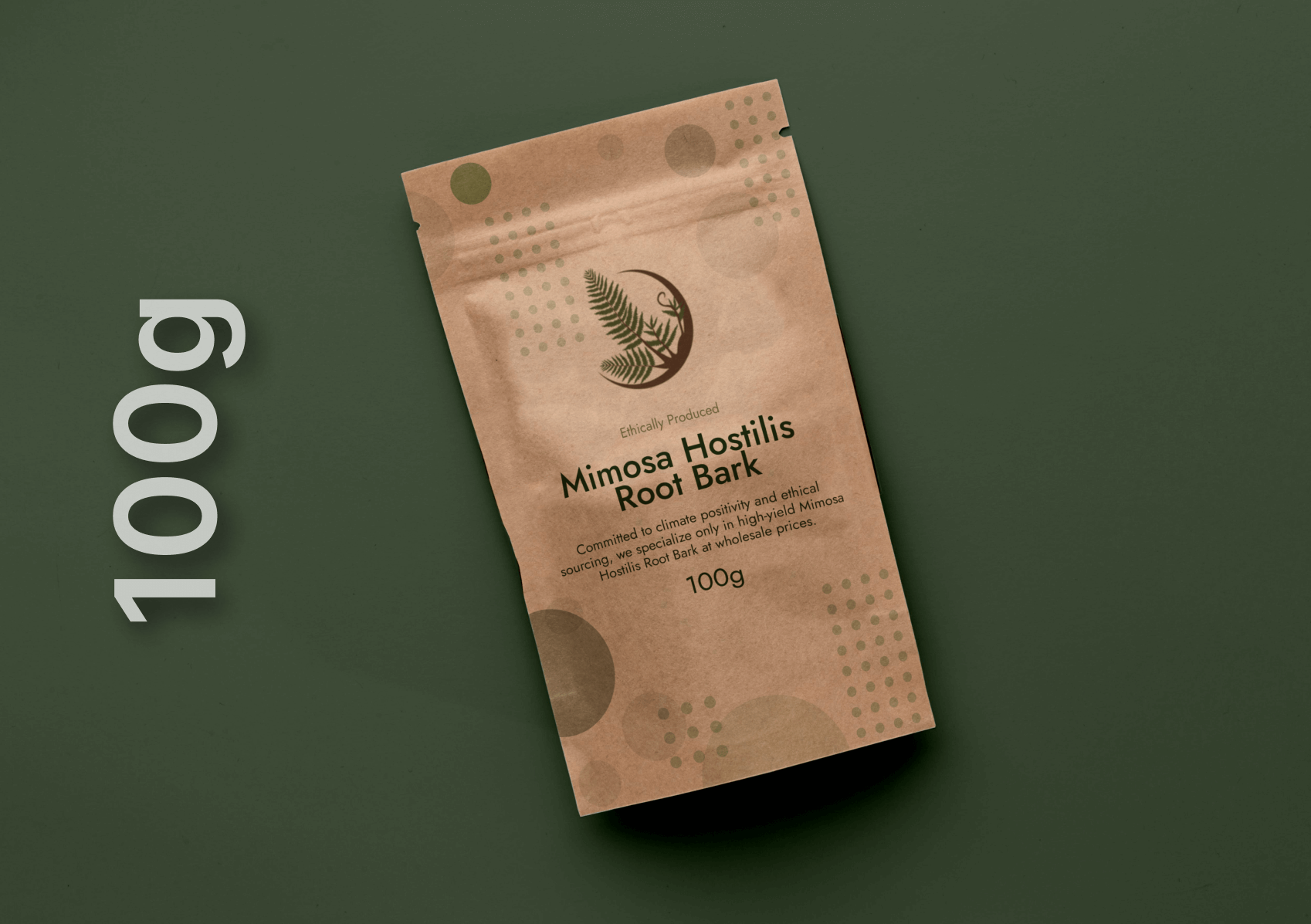
| Sample / hobbyist | 50g – 250g | Testing a supplier’s grade and color quality before committing |
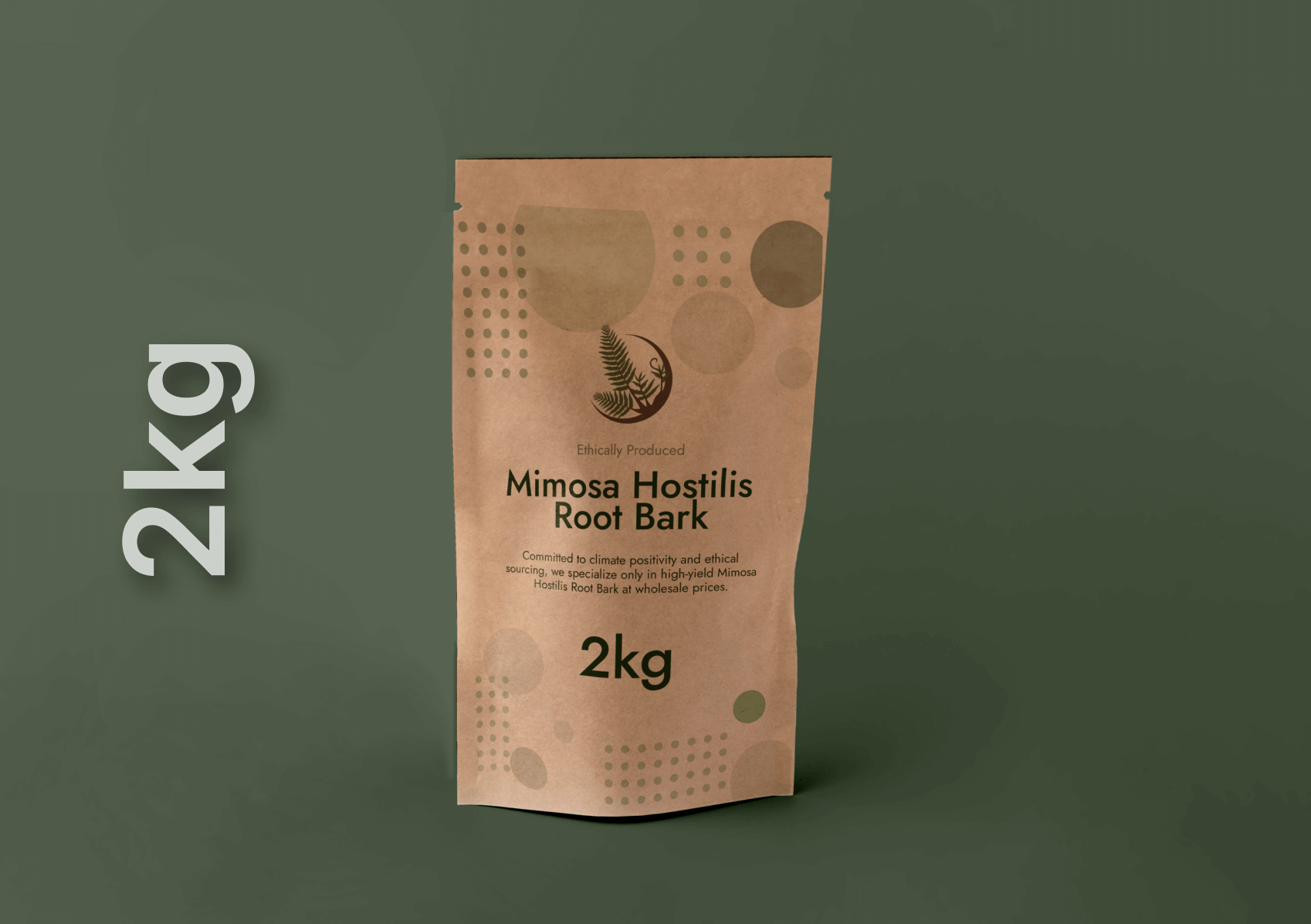
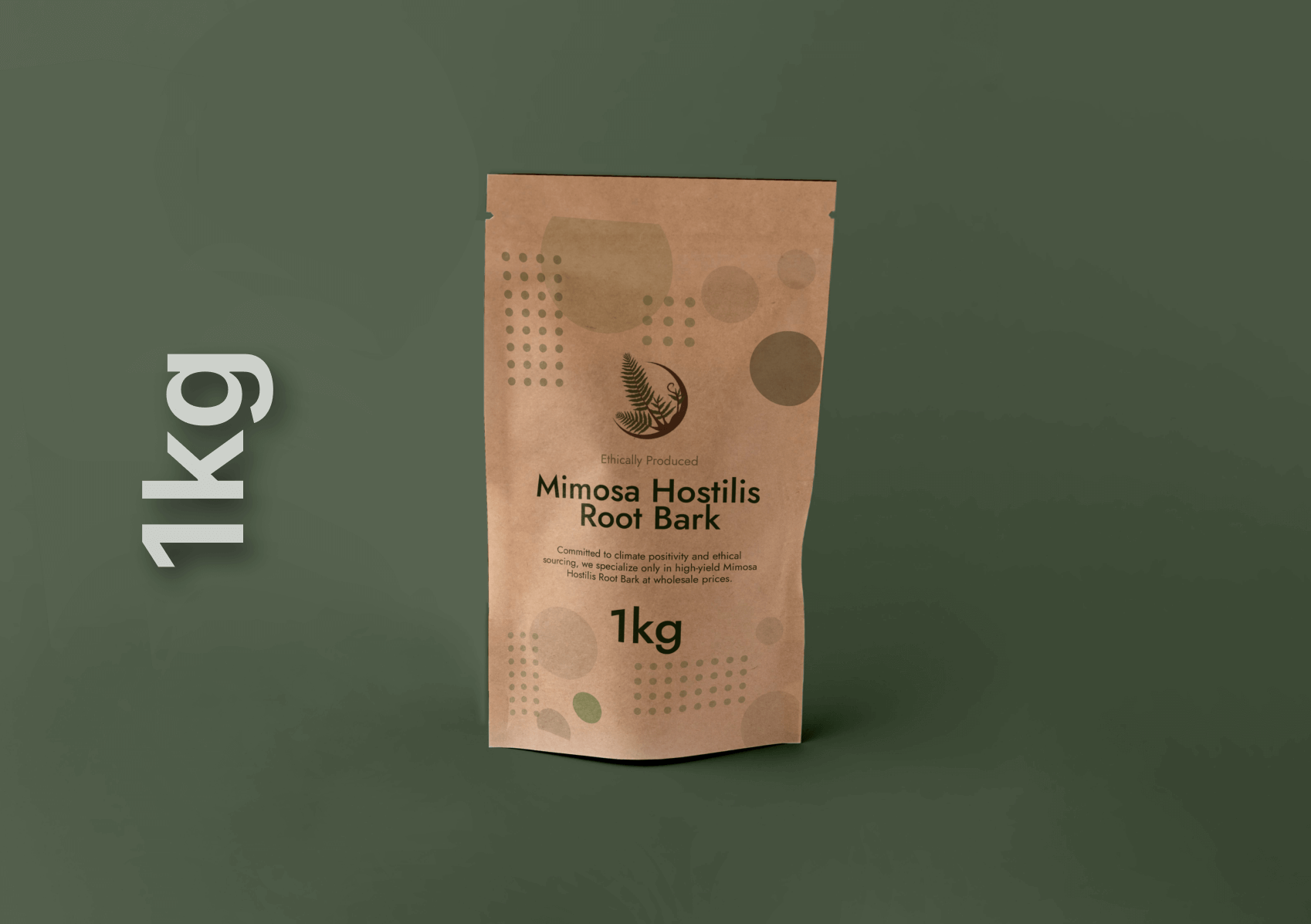
| Small business | 500g – 2kg | Independent dye studios, small-batch soap makers |
| Wholesale | 5kg – 15kg | Established dye houses, tanneries, cosmetic formulators |
| Commercial / distributor | 25kg+ | Manufacturers, resellers, large-scale craft suppliers |
A practical rule for first-time bulk buyers: always order a sample tier from a new supplier before committing to a wholesale order. Bark quality, particle size, and color yield vary enough between harvests and suppliers that a small test batch can save a significant amount of money.
Grading and Quality: What to Look For
Not all root bark is processed the same way, and quality differences show up directly in your dye vats, tanning baths, or formulations.
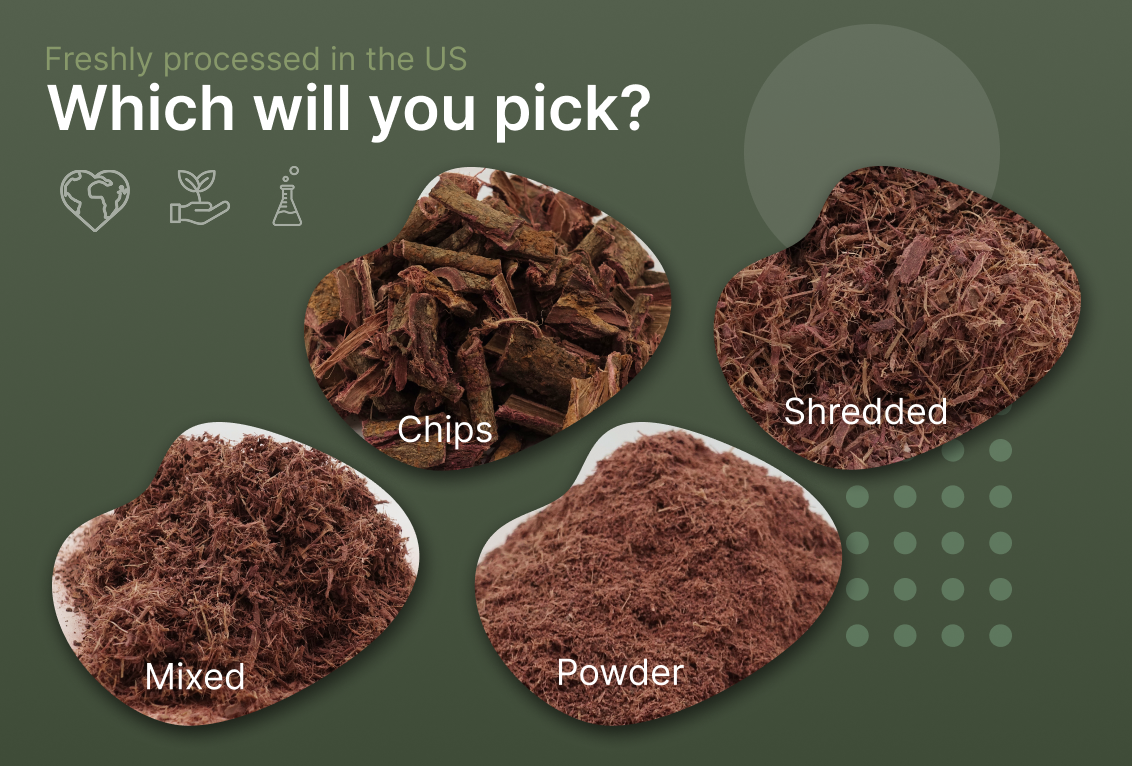
Whole bark vs. powder. Whole or chipped bark generally retains pigment and tannin content longer in storage and gives dyers more control over extraction strength. Pre-ground powder is more convenient but oxidizes faster and can lose potency if stored improperly.
Color consistency. Ask suppliers for a photo of the current harvest lot, not a stock photo. Color can shift from deep reddish-brown to a paler tan depending on harvest season, tree age, and drying method.
Moisture content and drying method. Properly dried bark should feel brittle, not leathery or damp. Bark that wasn’t dried thoroughly is prone to mold in transit and storage, which is one of the most common complaints in bulk botanical purchasing generally.
Country of origin. Brazilian-sourced bark is the traditional benchmark, but demand has pushed some suppliers toward Mexican-sourced material, which can differ slightly in tannin concentration. Neither is inherently better for dye work, but consistency matters more than origin — ask suppliers to confirm sourcing rather than assuming.
Sustainability and harvesting practices. Mimosa hostilis is fast-growing and not endangered, but root-bark harvesting kills the tree unless done selectively. Buyers sourcing at commercial volume should ask suppliers directly about harvesting practices — this is increasingly a question customers ask resellers, too, so it’s worth having an answer.
How to Vet a Bulk Supplier
Given the compliance sensitivity around this ingredient, supplier vetting matters more here than with most botanicals.
- Look for an established sales history, not just a new storefront. Reviews, order-volume signals, and how long a seller has operated are reasonable proxies for reliability, since this niche has a higher-than-average rate of fly-by-night sellers.
- Ask direct questions about shipping restrictions. A supplier who clearly states which countries or states they won’t ship to is signaling that they understand the regulatory landscape — that’s a good sign, not a bad one.
- Request a certificate of analysis or lot documentation if you’re formulating cosmetics for resale. This matters for regulatory compliance on the finished-product side, independent of the raw-material sourcing question.
- Compare price against realistic market ranges. Bulk pricing for quality bark typically runs from the mid-to-high teens per kilogram at small wholesale volumes down to noticeably less per kilogram at 25kg+ commercial volumes, though prices shift with harvest availability. Prices dramatically below the going rate are a signal to ask more questions, not necessarily a bargain.
- Confirm payment and return policies before ordering at volume. Because many payment processors restrict this category, sellers often rely on bank transfers or alternative payment methods — understand the recourse you have if a shipment arrives damaged, moldy, or mislabeled before wiring a wholesale-sized payment.
Shipping, Customs, and Storage Once It Arrives
Domestic vs. international shipping. Within a single country where the material is legal, shipping is generally straightforward and handled like any other bulk botanical. Cross-border shipments are where most delays happen — customs agents in many countries are trained to flag this specific botanical because of its alkaloid content, even when the shipment is fully legal in both origin and destination countries.
Documentation helps. For commercial buyers, having a business registration, an intended-use statement, and (where applicable) an import permit on hand can reduce delays if a shipment is inspected.
Storage once it arrives. Keep bulk bark in a cool, dry, dark location in airtight containers. Whole bark stores well for a year or more under good conditions; powdered bark should generally be used within a few months for the best color yield, since surface area accelerates oxidation.
Common Uses for Bulk-Purchased Bark
Natural textile dyeing. Dyers typically simmer chipped or shredded bark in water to extract pigment, then use the resulting dye bath on mordanted fiber. Bulk buyers in this category tend to prioritize color consistency across harvest lots above all else, since dye houses need to match colorways across production runs.
Leather tanning. Small tanneries use the tannin content as part of traditional vegetable-tanning processes, often blending it with other tannin-rich barks depending on the leather finish they’re after.
Cosmetic and skincare formulation. Under the Tepezcohuite name, powdered bark appears in artisanal soap bars, facial masks, and salves marketed for its traditional use in skin care. Businesses formulating for resale should treat this as a cosmetic-ingredient sourcing decision subject to their local cosmetic regulations, separate from the botanical-import question.
Craft and fiber-art supply businesses. Some buyers purchase in bulk specifically to repackage and resell smaller quantities to hobbyist dyers — if that’s your business model, factor reseller compliance and labeling requirements into your sourcing decision from the start.
Domestic vs. Overseas Suppliers: Trade-Offs to Weigh
Buyers generally choose between two sourcing paths, and each comes with a different risk profile.
Buying from a domestic reseller. A supplier already operating in your own country has typically cleared the customs hurdle for you — the bark is already inside your borders and legally available for sale under local rules. This usually means faster delivery, easier returns, and a simpler compliance picture, though prices per kilogram tend to run higher because the reseller has absorbed import costs and markup.
Buying directly from an overseas source. Ordering directly from a Brazilian or Mexican exporter can cut the per-kilogram price significantly at high volumes, but it shifts the customs and documentation burden onto you. This path makes the most sense for established businesses that order large, predictable quantities and have the infrastructure — a customs broker, an import license, consistent volume — to make the extra paperwork worthwhile. For smaller or first-time bulk buyers, the savings rarely offset the added risk of a held or seized shipment.
A reasonable middle path for growing businesses: start with a domestic reseller to establish product-market fit and reliable color/quality benchmarks, then evaluate direct overseas sourcing once order volume is large and predictable enough to justify the added logistics.
A Simple Sample-Testing Protocol Before You Commit to Wholesale
Experienced buyers rarely place a first wholesale order blind. A short testing protocol catches most quality problems before they become expensive:
- Order a small sample (50–250g) from each candidate supplier. Request the same lot that would ship if you placed a wholesale order, not a curated “best batch.”
- Run your standard process on each sample. For dyers, that means the same mordant, water ratio, and simmer time you’d use in production. For tanners and formulators, run your normal small-batch process.
- Compare color yield and consistency side by side. Photograph results in consistent lighting so you can compare supplier samples fairly.
- Check for off-odors or signs of mold. Properly dried and stored bark should smell earthy, not musty or sour — a musty smell is a strong signal of moisture damage during shipping or storage.
- Note packaging quality. Bulk shipments arriving in flimsy or non-food-grade packaging are a preview of how the supplier handles larger orders.
- Only then place a wholesale order, ideally starting at the low end of your needed volume until you’ve confirmed a second batch matches the first in quality.
This protocol takes a week or two longer than ordering straight to wholesale, but it’s the single most effective way to avoid a costly mismatch between what you tested and what arrives at scale.
Market Trends Shaping Availability and Price
A few dynamics are worth tracking if you’re sourcing this material regularly for a business rather than a one-off project:
- Growing demand from the natural-dye and slow-fashion movement. As more textile artists and small apparel brands move away from synthetic dyes, demand for tannin-rich, naturally sourced pigments like Mimosa hostilis bark has grown, putting some upward pressure on wholesale pricing during peak dyeing seasons.
- Seasonal harvest windows. Root bark harvesting follows agricultural cycles in Brazil and Mexico, meaning supply — and sometimes quality — can tighten at certain points in the year. Buyers who need consistent year-round supply often work with a supplier who can commit to holding stock rather than sourcing fresh for every order.
- Increased scrutiny from payment processors and marketplaces. As mentioned earlier, this ingredient’s association with a controlled alkaloid means mainstream platforms are more likely to restrict listings over time, which can shift where legitimate sellers operate and occasionally disrupt established supply relationships.
- Rising interest in Tepezcohuite skincare. Renewed interest in traditional Mexican botanicals in the clean-beauty space has added a new category of buyer competing for the same wholesale supply as dyers and tanners, which is worth factoring into your pricing and availability expectations.
Frequently Asked Questions
Is Mimosa hostilis root bark legal to buy?
The plant and bark itself are not scheduled substances in most countries, but they contain a naturally occurring alkaloid that is controlled in several jurisdictions, including the United States. Legality depends on your specific country and, in some cases, state or provincial law. Always verify your local regulations before ordering, especially in bulk.
What’s the difference between whole bark and powdered bark for dyeing?
Whole or chipped bark holds its pigment and tannin content longer in storage and gives more control over dye-bath strength, since you control the extraction time. Powdered bark is more convenient for quick use but oxidizes faster and should be used within a few months for best color results.
How much does bulk Mimosa hostilis root bark cost?
Pricing varies with harvest supply, grade, and quantity, but wholesale buyers typically see per-kilogram prices drop meaningfully at 5kg and larger order sizes compared to sample-sized purchases. Always request current pricing directly, since botanical markets shift with seasonal harvest availability.
Can businesses import this material for commercial use?
Many businesses do, but cross-border shipments face a meaningfully higher chance of customs delay than most botanicals because of the alkaloid association. Registered businesses should be prepared to provide documentation of intended use and check import requirements with their customs authority before ordering at commercial volume.
Why do color and tannin content vary between suppliers?
Harvest season, tree age, drying method, and country of origin all affect pigment concentration and consistency. This is why testing a small sample before a wholesale order is standard practice among experienced dye and tanning businesses.
The Bottom Line
Bulk buying Mimosa hostilis root bark for dye, tanning, or cosmetic use is a well-established practice, but it sits in a category where compliance homework has to come before the purchase order. Confirm your local legal standing first, test a sample lot before committing to wholesale volume, vet suppliers on shipping transparency and sourcing practices rather than price alone, and build in extra lead time for cross-border orders. Buyers who treat this as a two-part decision — legal clearance, then quality sourcing — tend to avoid the delays and losses that trip up buyers who skip straight to the checkout page.
This guide is for general informational purposes and does not constitute legal advice. Regulations vary by country and region and can change; consult a customs broker or attorney for guidance specific to your business and jurisdiction.