If you have ever gone down a rabbit hole researching natural plant remedies, ethnobotany, or traditional healing, you have almost certainly stumbled across a tree that goes by a dizzying number of names. Tepezcohuite in Mexico. Jurema in Brazil. MHRB across online communities. Carbonal, Tepescohuite, Mimosa tenuiflora, Mimosa hostilis — the list goes on. How can a single tree carry so many identities? The answer lies deep in history, culture, geography, linguistics, and the way human civilizations have independently discovered and named the natural world around them. This article unpacks the full story behind one of the most multiply-named trees on Earth.
What Tree Are We Actually Talking About?
Before diving into the names, it helps to establish exactly which tree is at the center of this conversation. The plant in question belongs to the legume family Fabaceae and is scientifically classified as Mimosa tenuiflora, though it was historically — and is still widely — referred to as Mimosa hostilis. It is a perennial tree or shrub that grows primarily in the dry forests and scrublands of northeastern Brazil, southern Mexico, and parts of Central America. It can reach heights of up to eight meters, has finely pinnate leaves, produces small white fragrant flowers, and grows a distinctive dark, ridged bark that has made it valuable to humans for thousands of years.
The tree thrives in harsh, semi-arid environments and is notably resistant to drought. It is a pioneer species, meaning it colonizes degraded land and helps restore soil nitrogen, which makes it ecologically valuable as well. But it is the inner root bark of this tree — rich in tannins, alkaloids, and other bioactive compounds — that has drawn human attention across continents and centuries, and it is that human attention that generated its many names.
Why Do Plants Have Multiple Names?
To understand why Mimosa tenuiflora has so many names, it is important to understand why any plant ends up with multiple identities. Common names for plants are not standardized. They arise organically within communities, languages, and regions. A plant discovered independently by two different indigenous civilizations separated by thousands of miles will receive two entirely different names — names that reflect that culture’s language, relationship with the plant, and the specific qualities they noticed first.
Scientific naming, known as binomial nomenclature, was developed precisely to solve this problem. But even within the scientific community, reclassifications happen, which is why Mimosa hostilis and Mimosa tenuiflora refer to the same species. The hostilis classification came from a botanical description based on Brazilian specimens, while tenuiflora is now the accepted name. Both circulate freely in literature and online.
The Name “Tepezcohuite” and Its Mexican Origins
Tepezcohuite is the name most commonly used in Mexico, particularly in the states of Chiapas and Oaxaca where the tree grows abundantly. The word comes from the Nahuatl language, once spoken by the Aztec empire and still spoken by millions of indigenous Mexicans today. In Nahuatl, the name roughly translates to “tree of skin” or “skin tree,” which speaks directly to one of the plant’s most celebrated traditional uses: wound healing and skin regeneration.
Mexican healers have used tepezcohuite bark preparations for centuries to treat burns, cuts, skin infections, and rashes. The tree came to widespread international attention in 1984 and 1985, when a series of devastating gas explosions in Mexico City left thousands of people with severe burns. Traditional healers reportedly used tepezcohuite bark preparations to treat burn victims, and the results attracted significant attention from medical researchers. This moment essentially launched tepezcohuite into the global skincare conversation, and the name stuck firmly in Mexican and international cosmetic markets.
Today, tepezcohuite extract is an ingredient in numerous commercial skincare products, face creams, soaps, and hair treatments, particularly those marketed across Latin America, Europe, and the United States. When you see tepezcohuite on a product label, it is specifically the Mexican cultural and commercial identity of Mimosa tenuiflora being invoked.
The Name “Jurema” and Its Deep Brazilian Roots
Travel to the northeastern Brazilian states of Pernambuco, Bahia, Paraíba, and Rio Grande do Norte, and you will not hear anyone call this tree tepezcohuite. Here, the tree is known as Jurema, and most specifically as Jurema Preta, meaning “Black Jurema,” a reference to the dark color of its roots and bark.
The name Jurema comes from Tupi, one of the foundational indigenous language families of Brazil. In Brazilian indigenous cosmology, Jurema is far more than just a plant. It is a sacred being, a spiritual entity, and the centerpiece of one of the most distinctive religious traditions in South America: the Jurema religion or Catimbó-Jurema. This syncretic tradition, practiced primarily in northeastern Brazil, blends indigenous shamanic practices with African religious influences and Catholic imagery, and Jurema Preta plays a central ceremonial role within it.
Jurema Preta is also the name given to the “spirit of Jurema,” a female divine entity associated with healing, the forest, and ancestral wisdom. This layering of meaning — where the plant name and the spiritual entity share the same word — reflects just how deeply embedded this tree is in Brazilian cultural identity. The name Jurema, therefore, carries an entire worldview within it.
There is also Jurema Branca (White Jurema), which refers to a related but distinct species, Mimosa verrucosa. This distinction matters because when people specifically seek Mimosa tenuiflora from Brazil, they are always referring to Jurema Preta.
What Does “MHRB” Stand For?
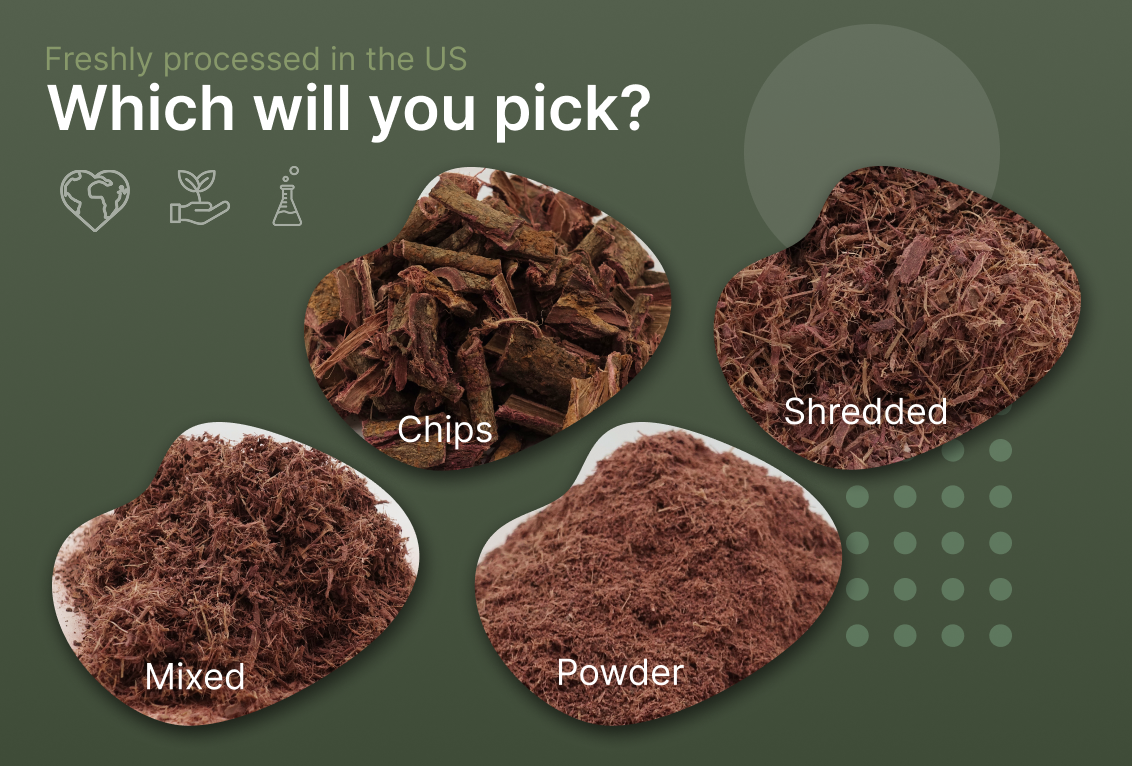
MHRB stands for Mimosa Hostilis Root Bark, and it is essentially a shorthand that emerged in online ethnobotanical and research communities. It is not a traditional or indigenous name. It is a functional descriptor — almost a catalog term — used to refer specifically to the dried and powdered or shredded inner root bark of the Mimosa hostilis plant.
The use of the older scientific name “hostilis” rather than the currently accepted “tenuiflora” in this abbreviation is largely a product of historical momentum. The plant was widely documented and discussed under the hostilis name before the reclassification, and that name had already become entrenched in communities that used it. MHRB circulates in contexts where people are primarily interested in the plant from a biochemical or ethnobotanical research standpoint.
The abbreviation itself reflects the way internet communities develop their own vocabulary. MHRB is immediately recognizable within those communities as a precise, unambiguous term that cuts through the confusion of regional common names. It specifies not just the species but the exact part of the plant and its form.
Other Regional Names Worth Knowing
The diversity of names for Mimosa tenuiflora does not stop at tepezcohuite, jurema, and MHRB. Across its native range and in communities that have traded or worked with the plant, several other names have emerged.
Carbonal
In parts of Mexico and Central America, the tree is sometimes called Carbonal, a reference to the charcoal-like appearance of its dark, furrowed bark. This name emphasizes the visual characteristic of the plant rather than its uses.
Tepescohuite
Tepescohuite is simply a common spelling variation of tepezcohuite. Different writers, researchers, and companies have spelled the Nahuatl-derived name in slightly different ways over the years, leading to both versions appearing widely in print and online. Neither is definitively more correct than the other in the context of Spanish transliteration.
Cabrera
In some local Mexican communities, particularly in Chiapas, the tree is called Cabrera. This is a highly localized name and does not circulate widely beyond those specific regions.
Vinho de Jurema
This is not a name for the tree itself but for a traditional ceremonial preparation made from the tree’s roots in Brazil. Vinho de Jurema means “wine of Jurema” and refers to a drink used in indigenous and syncretic religious ceremonies. It bridges the plant’s identity with its ritual application.
The Botany Behind the Name Confusion: Hostilis vs. Tenuiflora
The Original Classification
The confusion between Mimosa hostilis and Mimosa tenuiflora deserves its own explanation. The plant was first formally described by German botanist Carl Friedrich Philipp von Martius in the 19th century based on specimens collected in Brazil. His classification produced the hostilis epithet. Decades later, it became clear that the Brazilian specimens and Mexican specimens that had been described separately were in fact the same species.
The Current Accepted Name
Mimosa tenuiflora is today’s accepted scientific name, recognized by major botanical databases including Plants of the World Online and the Missouri Botanical Garden. The tenuiflora epithet refers to the plant’s fine or slender flowers. However, because so much literature, research, and community knowledge was built around the hostilis name, it continues to appear constantly, sometimes even in recent scientific papers.
Understanding this botanical name history is essential for anyone researching the plant, because literature searches using one name may not surface results that use the other.
Why the Root Bark Specifically?
A significant reason this tree attracts so much attention — and thus accumulates so many names and contexts — is the unique composition of its inner root bark. This part of the plant contains a notably high concentration of tannins, which have genuine antimicrobial and astringent properties that support wound healing and skin health. These tannins are largely responsible for the verified dermatological applications of tepezcohuite that have been studied in scientific literature.
The root bark also contains alkaloids and other bioactive compounds that have drawn interest from researchers studying traditional pharmacology. The specific biochemical profile of the root bark differs from that of the stem bark and leaves, which is why MHRB specifies the root bark rather than simply the bark in general. Traditional healers in both Mexico and Brazil worked with the root bark preferentially, and that accumulated traditional knowledge aligns with what botanical chemistry later identified as the most bioactive portion of the plant.
How Traditional Knowledge Shaped Modern Commerce
The journey of this plant from indigenous medicine to global commerce is a fascinating case study in how traditional ecological knowledge enters the mainstream. In Mexico, the attention generated by the 1984 gas disaster created a market for tepezcohuite-based skincare products that grew steadily through the 1990s and into the 2000s. By the 2010s, tepezcohuite was appearing in product lines across Europe and North America, marketed for its purported anti-aging, wound-healing, and skin-regenerating properties.
In Brazil, jurema preta has similarly entered the domestic wellness and cosmetics market, appearing in hair care products, soaps, and herbal preparations. The tree’s resilience, rapid growth, and the accessibility of its bark have made it a sustainable harvest candidate in parts of northeastern Brazil, where small-scale producers have built livelihoods around it.
Ecological Significance Adds Another Layer of Identity
Beyond its cultural and commercial identities, Mimosa tenuiflora carries an ecological identity that gives it yet another layer of meaning and naming. In the caatinga biome of northeastern Brazil — one of the most biodiverse dry forests in the world — jurema preta is a keystone species. It fixes atmospheric nitrogen into the soil through symbiotic bacteria in its root nodules, enriching degraded land and enabling other species to establish themselves.
Brazilian land restoration projects have used jurema preta as a pioneer species for reforestation of degraded caatinga. In this context, the tree is named and valued not for its bark chemistry but for its ecological function. This illustrates perfectly how a single species can hold entirely different identities depending on who is looking at it and why.
The Role of Language in Shaping Plant Identity
Languages do not just label the world — they shape how communities relate to it. The Nahuatl name tepezcohuite encodes a relationship with the plant focused on skin healing. The Tupi-derived name jurema encodes a relationship focused on spiritual connection and ancestral wisdom. The scientific name Mimosa tenuiflora encodes a relationship focused on taxonomic classification and botanical accuracy. MHRB encodes a relationship focused on the plant’s physical form and biochemical interest.
None of these names is more true than the others. Each one is a window into a different human relationship with the same living organism. The multiplicity of names is not a problem to be solved — it is a record of how widely and deeply this particular tree has touched human life across geography and time.
Conclusion
The answer to why Tepezcohuite, Jurema, and MHRB all refer to the same tree is really the answer to a much bigger question: how do human beings relate to the natural world, and how do those relationships get encoded into language? Mimosa tenuiflora, by whatever name you choose to call it, is a tree that has served as a healer, a sacred entity, a biochemical subject of study, and an ecological pioneer across two continents. Each of its names is a testament to a different culture’s discovery, reverence, and use of this remarkable plant. Whether you encounter it as a skincare ingredient on a product label, as a sacred name in a Brazilian spiritual ceremony, or as a shorthand in an ethnobotany research forum, you are looking at the same tree through a different cultural lens. Understanding all of those lenses together gives you a far richer picture of both the plant and the human cultures that have grown alongside it.
Frequently Asked Questions
Q1: Is Tepezcohuite the same as Jurema?
Yes, both names refer to the same plant species, Mimosa tenuiflora. Tepezcohuite is the name used in Mexico, derived from Nahuatl, while Jurema Preta is the name used in northeastern Brazil, rooted in Tupi indigenous language and culture.
Q2: What does MHRB stand for?
MHRB stands for Mimosa Hostilis Root Bark. It is a shorthand term used in ethnobotanical and research communities to refer specifically to the dried inner root bark of the Mimosa tenuiflora plant, using its older scientific name Mimosa hostilis.
Q3: Which part of the Mimosa tenuiflora tree is most commonly used?
The inner root bark is the most valued part of the tree. It contains the highest concentration of tannins and bioactive compounds, which is why traditional healers in both Mexico and Brazil worked with it preferentially for skin healing and ceremonial purposes.
Q4: Is Mimosa hostilis the same as Mimosa tenuiflora?
Yes, they are the same species. Mimosa tenuiflora is the currently accepted scientific name, while Mimosa hostilis is an older classification that remains widely used in literature, online communities, and commercial contexts due to historical momentum.
Q5: Why is tepezcohuite used in skincare products?
Tepezcohuite bark extract is rich in tannins, which have documented antimicrobial and astringent properties that support wound healing and skin regeneration. Its use in cosmetics grew significantly after Mexican healers used it to treat burn victims following the 1984 gas explosions in Mexico City.