
Library
Mimosa Tree vs Mimosa Hostilis: Two Different Plants, One Confusing Name
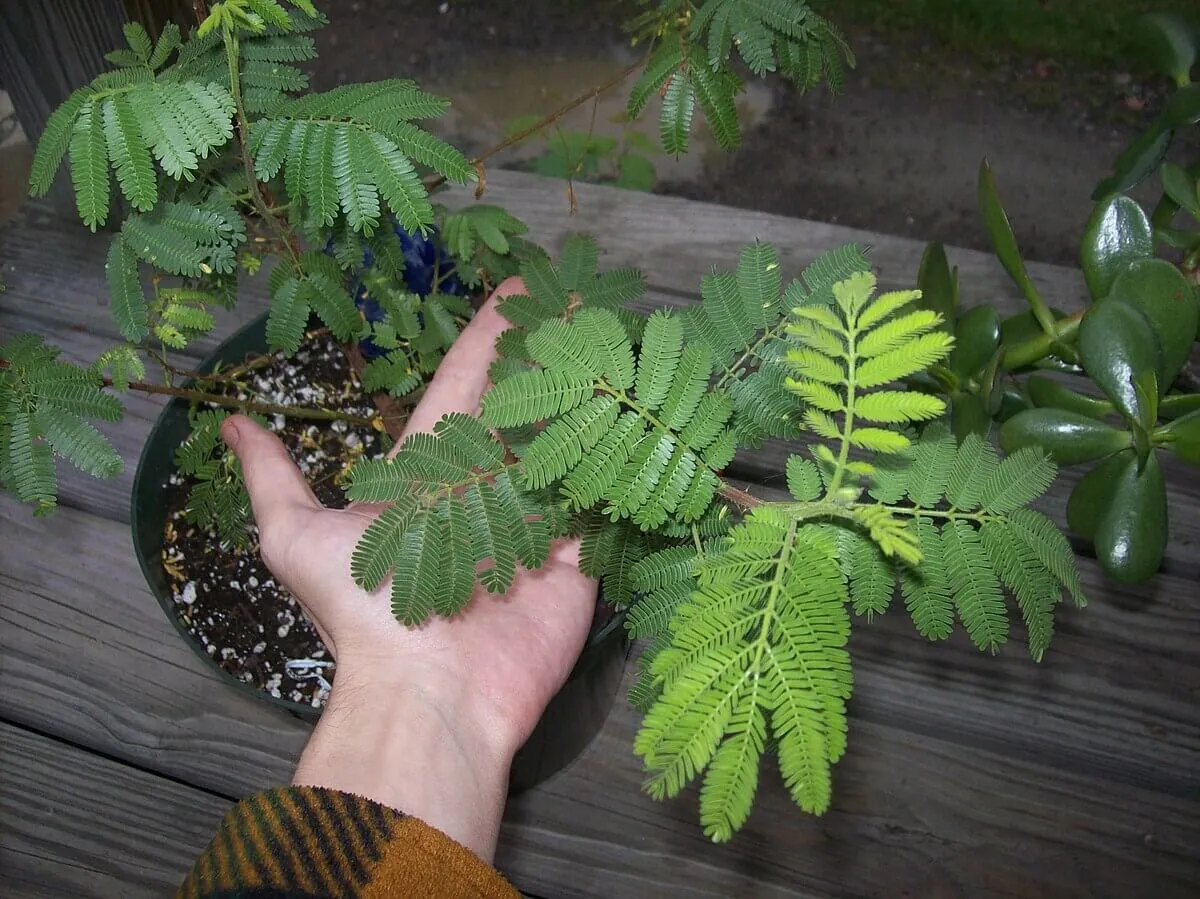
In the United States, the pink-flowered tree called a mimosa is Albizia julibrissin, the Persian silk tree. Mimosa hostilis is a different plant, Mimosa tenuiflora, a prickly shrub or small tree from Brazil and Mexico. Root bark sold as MHRB comes from Mimosa tenuiflora, not from the backyard silk tree.
The mix-up is almost entirely a common-name problem. Nurseries, extension offices, and neighbors in the South all say “mimosa” for the silk tree. The plant this shop sells is the root bark of Mimosa tenuiflora, a species Kew’s Plants of the World Online accepts under that name, with Mimosa hostilis as a synonym. Same word, two trees, and only one of them is the source of the bark.
Which question you actually have
- A pink tree in a yard, or a nursery tag that says mimosa. Use the table and the five checks. You are separating two living plants.
- A bag of root bark. Skip to the section on which plant the bark comes from. The bag will not show you a flower.
- A low plant that folds its leaves when you touch it. That is a third species. It gets one paragraph below, then a link to its own page.
Side by side
The rows below are the checks that separate a yard tree from the plant the bark comes from. Heights and flower details follow the US Forest Service Fire Effects Information System for the silk tree, and the Flora de Nicaragua account published on World Flora Online for Mimosa tenuiflora. Hardiness for the silk tree is the range in the University of Florida IFAS fact sheet ST-68.
| Check | Persian silk tree | Mimosa hostilis |
|---|---|---|
| Accepted name | Albizia julibrissin Durazz. | Mimosa tenuiflora (Willd.) Poir. |
| Family | Fabaceae | Fabaceae |
| Native range | Iran to East Asia; planted and escaped in the United States | Southern Mexico to Venezuela, and northeastern Brazil |
| Usual size | About 10–50 ft (3–15 m), often multi-trunked with a broad crown | Shrub or tree, commonly 2–5 m (about 6–16 ft), sometimes up to 8 m (about 26 ft) |
| Flowers | Pink, fragrant powder-puff heads, about 1–2 in across, in late spring and summer | Dense cylindrical spikes 3–6.5 cm long. The corolla is pink to purple and the stamens are white, so the spike looks pale, not like a pink puff |
| Stems | Bark thin and nearly smooth. Forest Service descriptions do not treat stem prickles as a feature | Often armed with scattered prickles about 2–10 mm long. Some twigs are unarmed, so “no prickles” is not proof of a silk tree |
| Leaves | Bipinnate, about 15–38 cm (6–15 in) long, leaflets about 5–15 mm (1/4–5/8 in) | Bipinnate and fern-like. Leaf stalks are often only a few centimeters, with leaflets about 3–6 mm (1/8–1/4 in) |
| Pods | Flat legumes about 8–20 cm (3–8 in) long | Narrow pods about 2–4.5 cm (about 1–1.75 in) long and 5–7 mm wide, breaking into 2–6 segments |
| US climate | USDA zones 6b–9b in the UF/IFAS fact sheet. Listed as invasive across the Southeast | A frost-tender tropical plant. It is not the zone 6–9 landscape tree sold as mimosa |
| What people use | Ornamental shade. Not a root-bark dye crop | Inner root bark for dye, soap, and leather tannin |
Five checks, in the order you can actually see them
1. The flower
Start here. A silk tree in bloom is a pink powder puff: a round head of long pink stamens, fragrant, sitting at the ends of the twigs. Mimosa tenuiflora blooms in a dense spike, a short cylinder rather than a ball. On that spike the corolla is pink to purple and the filaments are white. From across a yard the silk tree reads as pink pompoms. The hostilis spike does not.
2. The stem
Run a hand (carefully) along a young woody twig. Jurema stems are often set with short, scattered prickles. The Forest Service review of silktree describes thin, nearly smooth bark and a broad crown, not a prickly shrub. A few hostilis twigs can be unarmed, so the absence of prickles is a clue, not a verdict. A prickle on a fern-leaved shrub in dry scrub is a strong point toward Mimosa tenuiflora.
3. The leaf, which will not settle the question alone
Both plants have twice-divided, fern-like leaves, which is why the names collided. The silk tree’s leaf is the larger one, often 15–38 cm long, with leaflets about 5–15 mm. Hostilis leaflets in the Nicaragua flora are about 3–6 mm long, on a shorter leaf stalk. Silk-tree leaves also fold up in low light. That movement is not unique to one species, so a leaf that closes at dusk does not identify the tree.
4. The pod
Silk-tree pods are long, flat beans, commonly 3–8 inches, and they hang on the tree and litter the ground. Hostilis pods are much smaller: about 2–4.5 cm long and only 5–7 mm wide, with a few joints. A tree raining long flat pods under a pink canopy is the silk tree.
5. What the plant is for
Nobody harvests Persian silk tree roots for the reddish inner bark sold as MHRB, jurema, or tepezcohuite. That material is the root bark of Mimosa tenuiflora. If the question is “which tree is the bark from,” the flower and the prickles matter more than the leaf. The Mimosa hostilis tree page is the full description of that plant: height, leaves, spikes, and range.
Why one English name landed on two plants
Albizia julibrissin was brought to North America as an ornamental in the eighteenth century. Gardeners called it mimosa because the leaves look like a mimosa and because an older name, Mimosa julibrissin, put it in that genus. The accepted name now is Albizia. The tree is still “mimosa” on nursery tags from New York south through Texas and across the Southeast.
Mimosa hostilis kept the genus. Kew lists it as a synonym of Mimosa tenuiflora. In Brazil the tree is jurema or jurema preta. In Mexico the bark is tepezcohuite. English-language shops, including this one, still say Mimosa hostilis because that is the name buyers search. The two English uses of “mimosa” were never the same species. Mimosa hostilis and Mimosa tenuiflora are one species under two scientific names. The silk tree is not part of that pair.
A label that says only “mimosa”
A nursery tag, a seed packet, and a bag of root bark can all use that one word and still be three different offers. A tag that says mimosa, silk tree, or pink mimosa is Albizia julibrissin. A packet sold in the United States as “mimosa tree seed” is almost always the same silk tree. This page will not tell you how to plant it. Extension services in the Southeast already treat it as a tree to keep out of natural areas, not as a crop.
A listing for root bark is the other plant when it also says Mimosa hostilis, Mimosa tenuiflora, jurema, jurema preta, or tepezcohuite. Those names point at one species. They do not point at the pink yard tree, and they do not point at the little sensitive plant that shuts its leaves when you touch it.
Both trees sit in the legume family, Fabaceae, and both have fern-like leaves. That shared family is why the English name stuck. It does not make the bark interchangeable. The dye and tannin material is the inner root bark of Mimosa tenuiflora. The silk tree’s value, where people still plant it, is flowers and light shade. Those are different products from different genera.
Where Mimosa pudica fits
A third plant gets pulled into the same conversation. Mimosa pudica, the sensitive plant, is a low herb that folds its leaves when you touch them. It is not a tree, it does not make pink powder puffs, and it is not the source of root bark. One paragraph is enough here. The longer comparison is Mimosa hostilis versus Mimosa pudica.
Which plant the root bark comes from
MHRB, jurema preta, and tepezcohuite bark are names for the inner root bark of Mimosa tenuiflora. The silk tree is a landscape plant, and in much of the South it is a weed. The US Forest Service treats silktree as an invasive nonnative. This page is not a planting guide for it. Removing it, where it has escaped, is a question for a local extension office, not for a bark shop.
If you are buying bark for dye, soap, or leather, you want the Brazilian and Mexican species. Packs from 100 g to 10 kg, in chips, shredded bark, or powder, are on the Mimosa hostilis root bark page. Shipping is inside the United States.
A photo of reddish shredded bark cannot show you the flower or the prickles. Identify the living tree with the five checks above, then buy bark from a seller who names Mimosa tenuiflora or Mimosa hostilis. A photo of a pink-flowered yard tree, however pretty, is not evidence that the bag of bark came from that tree. The tree and the product are only connected when the name on the bag is the species in the right-hand column of the table.
What a photo can settle
| What is in the frame | What you can say |
|---|---|
| Round pink heads | Persian silk tree. Mimosa hostilis does not bloom that way. |
| Long flat pods on the tree or on the lawn | Persian silk tree. Those pods are several times longer than a hostilis pod. |
| Pale cylindrical spikes | Consistent with Mimosa hostilis, if the twigs or the pods agree. |
| Short, narrow, jointed pods | Consistent with Mimosa hostilis. |
| Ferny leaves and nothing else | Not enough. Both trees have that leaf plan. |
| A low herb that shuts its leaves when touched | Mimosa pudica. Not either tree. |
In the eastern United States the silk tree is the one you can check on a calendar. The North Carolina Extension Gardener entry records the pink heads from May into July. The leaflets also fold at night and when they are handled. A June photo of pink pompoms over a lawn is finished. You do not need a bark sample.
Numbers that get repeated until they are wrong
Some descriptions send the silk tree to 20 m. The US Forest Service review puts ordinary trees at about 10–50 ft (3–15 m), often with several trunks and a broad crown. A single champion has been measured taller than that range. When you are standing in a yard, use the ordinary range. A 20 m figure is not what the tree down the street is doing.
Some descriptions stop at “Mimosa hostilis has small white flowers.” The spike does look white or cream from a short distance, because the stamens are white. The Flora de Nicaragua describes the corolla as pink to purple. The shape is still a cylinder. It is not a pink ball, and it is not a solid white ball either.
The leaflet is the quiet measurement. Silk-tree leaflets run about 5–15 mm, roughly a quarter of an inch to five-eighths. Hostilis leaflets in the Nicaragua flora are about 3–6 mm, closer to an eighth of an inch up to a quarter. Hold one leaflet against a ruler. A photo of a whole crown will not show that difference.
None of this is a planting guide. The silk tree is listed as invasive through much of the Southeast, and this page will not tell you how to grow it, prune it, or collect its seed. If the question is the bark, the plant you want is Mimosa tenuiflora.
Frequently Asked Questions
Almost certainly not, if the flowers are pink powder puffs and the tree is a common Southern yard tree. That plant is Albizia julibrissin. Mimosa hostilis is Mimosa tenuiflora, a prickly shrub or small tree native to Brazil and from southern Mexico to Venezuela. The shared nickname is the whole overlap.
Both have bipinnate, fern-like leaves, which is why people confuse them. Silk-tree leaves are larger, often 15–38 cm long, with leaflets about 5–15 mm. Hostilis leaflets are smaller, about 3–6 mm in the Nicaragua flora. Leaves alone will not name the tree. Flowers and pods will.
No. Root bark sold for dye, soap, and leather is Mimosa tenuiflora. Albizia julibrissin is a different genus. Its flowers, pods, and lack of the jurema prickle pattern already show it is not the same tree, and it is not the bark this shop sells.
The US Forest Service lists silktree as an invasive nonnative in North America. It was introduced as an ornamental in the eighteenth century and now grows through the Southeast and beyond. That status belongs to Albizia julibrissin. It is not a description of Mimosa tenuiflora.
Search Mimosa hostilis, Mimosa tenuiflora, jurema, or tepezcohuite when you want the root bark. “Mimosa tree” in American English usually means the silk tree, and that tree does not produce this bark. Hostilis and tenuiflora are two scientific labels for one accepted species, not a third plant to compare.