Library
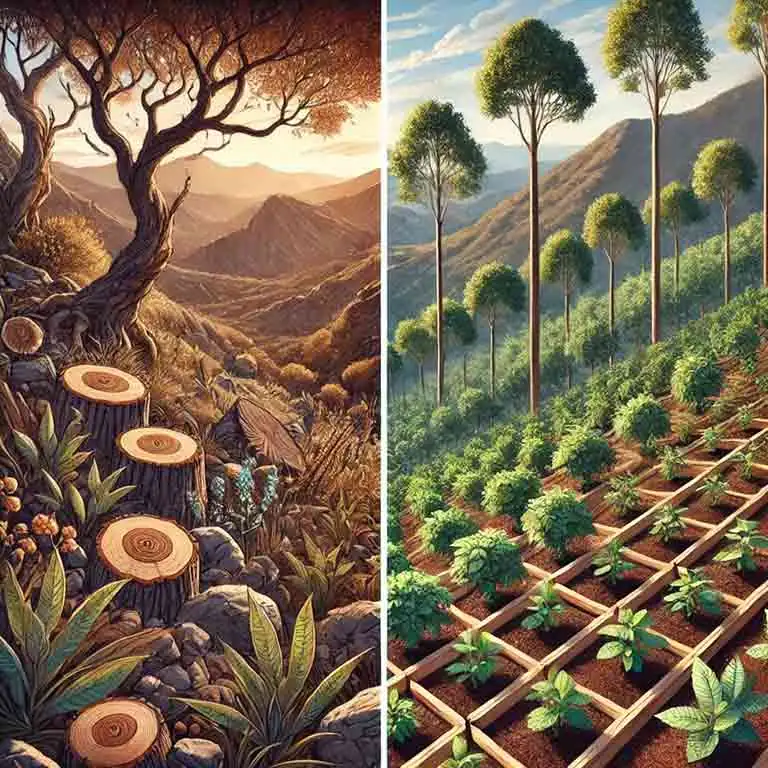
Wildcrafting vs. Cultivating Tepezcohuite: Pros and Cons
Last Updated: August 12, 2026
Quick Answer
Wildcrafted Tepezcohuite (Mimosa tenuiflora) is harvested from naturally occurring trees, mostly in southern Mexico and Brazil’s Caatinga, and depends on selective, low-impact techniques to avoid killing the tree. Cultivated Tepezcohuite is grown on farms or in agroforestry systems, giving formulators predictable tannin content and year-round supply. Neither method is universally superior — wildcrafting sustains biodiversity and Indigenous livelihoods when done selectively, while cultivation reduces pressure on wild stands and standardizes quality for skincare and clinical use. The species itself is listed as Least Concern by the IUCN, but local overharvesting remains a documented risk where demand outpaces regeneration cycles.
What Is Tepezcohuite, Exactly?
Tepezcohuite is the Mexican common name for Mimosa tenuiflora, a thorny, fast-growing legume tree native to dry forests in southern Mexico and northeastern Brazil, where it is also called jurema preta. Its root and stem bark is rich in condensed tannins, saponins, and flavonoids, which is why it has been used topically for skin recovery for centuries and is now a recognized skincare ingredient (INCI name: Mimosa Tenuiflora Bark Extract). The tree is also a nitrogen-fixing pioneer species, meaning it improves degraded soil wherever it grows.
Interest in Tepezcohuite has grown well beyond folk medicine. It gained international scientific attention after bark powder was used to treat hundreds of burn victims following a 1984 gas-depot explosion in Mexico City, an event frequently cited in the phytochemical literature as the turning point that pushed the plant into formal clinical research (Rivera-Arce et al., Journal of Ethnopharmacology, 2007). That history is part of why sourcing method — wild versus cultivated — now matters commercially as much as it matters ecologically.
Wildcrafting Tepezcohuite: How It Works and Why It Matters
Wildcrafting means harvesting bark directly from Tepezcohuite trees growing in their natural range, primarily the dry forests of Oaxaca and Chiapas in Mexico and the Caatinga biome across Pernambuco, Paraíba, Rio Grande do Norte, and Ceará in Brazil. It is not simply “going out and stripping bark” — responsible wildcrafting follows generations of ecological knowledge about which trees to harvest, when, and how much bark a tree can lose without dying.
Pros of Wildcrafting
- Supports native ecosystems. Mimosa tenuiflora is a nitrogen-fixing pioneer species that anchors soil, slows erosion, and helps regenerate degraded land in the Caatinga and similarly arid Mexican habitats — a role documented in nodulation studies of Mimosa species across Brazil’s dry-forest biomes (dos Reis Jr. et al., New Phytologist, 2010).
- Preserves Indigenous knowledge and livelihoods. In Mexico, Tzotzil and Zoque farming communities and, in Brazil, rural and Indigenous families have harvested this species for generations, and the practice remains a meaningful income source tied directly to land stewardship.
- Genetic and phytochemical diversity. Trees exposed to variable rainfall, soil, and stress conditions in the wild are believed by some formulators to develop a broader phytochemical profile than uniformly grown stock, though this claim is still more anecdotal than settled science.
- Low capital requirement. Unlike farming, wildcrafting requires no land purchase, irrigation, or multi-year establishment period, which keeps it accessible to smaller harvesting communities.
Cons of Wildcrafting
- Overharvesting risk is real and documented. Multiple sustainability guides in this space now specify that responsible operations harvest only about 30–40% of available root bark per tree and allow 3–5 years of recovery between harvests — a threshold that, when ignored, can kill the tree outright since bark stripped too deeply damages the vascular cambium the tree needs to survive.
- Supply and potency vary. Tannin and saponin concentration shifts with rainfall, soil chemistry, and tree age, which is a real problem for skincare brands and researchers who need a standardized active-ingredient percentage batch to batch.
- Regulatory and habitat pressure. Land conversion, drought cycles linked to regional climate shifts, and unregulated commercial buying all threaten the long-term reliability of wild stands, even though the species as a whole is currently assessed as Least Concern by the IUCN Red List rather than threatened.
- Traceability is harder. Wild bark passes through more intermediaries before reaching a buyer, which makes it harder to verify that a specific batch was harvested selectively rather than stripped from a felled tree.
Cultivating Tepezcohuite: Structured, Scalable, Standardized
Cultivation means growing Mimosa tenuiflora intentionally — on dedicated farms, in agroforestry plots mixed with other crops, or as part of reforestation programs on previously degraded land. Because the tree is drought-tolerant and self-fertilizing (via nitrogen fixation), it is increasingly used in restoration plantings even outside commercial bark production, which gives cultivation a dual purpose: supply chain and land recovery.
Pros of Cultivation
- Consistent, testable tannin content. Growers can control soil, spacing, and harvest timing to produce bark with a repeatable chemical profile — the kind of consistency that clinical research depends on. The randomized, double-blind trial on Tepezcohuite extract for venous leg ulcers, for example, standardized its hydrogel to a fixed 1.8% tannin concentration specifically because consistent dosing was required for valid results (Rivera-Arce et al., 2007).
- Reduces pressure on wild populations. Every kilogram sourced from a managed plot is a kilogram not stripped from a wild tree, which matters most in areas where local overharvesting — not species-wide extinction risk — is the actual concern.
- Faster restoration integration. Field trials in Brazil’s Caatinga have planted M. tenuiflora alongside native species specifically to accelerate recovery of grazing-degraded land, with more than half of planted seedlings surviving after a 14-year monitoring period in one long-term study (Scientia Forestalis / SciELO, Brazil).
- Predictable economics for buyers. Farms can forecast yield and negotiate supply contracts in a way wild harvesting cannot, which matters to skincare manufacturers planning product lines a year or more in advance.
Cons of Cultivation
- High upfront investment and multi-year payback. Land, seedlings, irrigation, and labor are all sunk costs before the first commercially viable harvest, and Mimosa tenuiflora needs several years of growth before bark can be sustainably taken.
- Monoculture risk. Large single-species plantations can reduce local biodiversity and increase vulnerability to pests or soil depletion if not managed with agroforestry principles (mixed planting, cover crops, rotational harvest zones).
- Loses some cultural and ecological nuance. Farmed bark is not connected to the same traditional ecological knowledge systems that have sustained wildcrafting for generations, and some buyers specifically want wild-origin material for that reason.
- Not automatically “greener.” Cultivation is only more sustainable than wildcrafting when it uses regenerative practices; a poorly managed monoculture farm can cause more soil damage than a well-regulated wild harvest.
Environmental Sustainability: Head-to-Head Comparison
| Factor | Wildcrafted | Cultivated |
|---|---|---|
| Pressure on wild populations | Higher if unregulated | Lower — shifts demand to managed land |
| Biodiversity support | High, when selective | Depends on monoculture vs. agroforestry design |
| Soil/erosion benefit | Passive (existing root systems) | Active (often used in restoration plantings) |
| Vulnerability to climate/drought | High | Moderate — irrigation can buffer |
| Traceability | Harder to verify | Easier to certify and audit |
Neither method is inherently “the sustainable one.” Wildcrafting done with restraint protects standing forest and cultural knowledge; cultivation done with regenerative methods protects wild stands while building new soil. The failure mode for each is different — unregulated stripping for wildcrafting, and monoculture depletion for cultivation.
Quality and Chemical Consistency: What the Research Shows
This is where the science is furthest along, and it’s the strongest argument for cultivation in any application where dosage matters. Peer-reviewed research has repeatedly tied Tepezcohuite’s wound-healing effect to specific compound classes rather than the bark in general:
- Arabinogalactans isolated from the bark were shown to significantly stimulate dermal fibroblast proliferation in vitro, giving a mechanistic explanation for the traditional use of bark powder on wounds (Zippel et al., Journal of Ethnopharmacology, 2009).
- A systematic review of medicinal plants used in cutaneous wound healing credits Tepezcohuite’s effect to its high polyphenol content and to triterpenic saponins (named mimonosides A–C) that promote human cell proliferation and show immunomodulatory activity (PMC Systematic Review, 2018).
- Condensed tannins from the bark have also demonstrated measurable antimicrobial and anti-aflatoxin activity in laboratory studies, reinforcing why tannin percentage — not just “bark presence” — is the metric formulators should actually be tracking (PMC, Toxins, 2021).
Because tannin and saponin concentration is the active-ingredient metric that matters, and because wild bark’s concentration fluctuates with rainfall and soil, cultivated bark has a structural advantage for any brand or lab that needs to state a consistent percentage on a label or in a study protocol. Wild bark can absolutely meet the same standard — but it requires batch testing that many small wildcrafted supply chains don’t currently do.
Economic Impact Comparison
| Factor | Wildcrafted | Cultivated |
|---|---|---|
| Startup cost | Low | High (land, irrigation, labor, years to first harvest) |
| Who benefits directly | Rural/Indigenous harvesting communities | Farm owners, agricultural workers, exporters |
| Supply predictability | Low — seasonal and climate-dependent | High — plannable yields |
| Scalability | Limited by tree recovery cycles | Scalable with more land/labor |
| Price stability | Volatile | More stable, contract-friendly |
Wildcrafting keeps income inside the communities that have always depended on this tree, but that income is exposed to drought years, market swings, and the natural limits of how much bark a wild population can safely give up. Cultivation trades that flexibility for a bigger, slower bet: real capital risk in exchange for a supply chain a manufacturer can actually forecast.
The Hybrid Model: Why the Industry Is Moving This Direction
The most credible sustainability position in 2026 is not “wildcrafting versus cultivation” — it’s both, deliberately combined. A hybrid sourcing model uses certified, ethically wildcrafted bark to preserve wild-population genetics, Indigenous income, and traditional knowledge, while using cultivated and agroforestry-grown bark to absorb the bulk of rising commercial demand.
In practice, that looks like:
- Transparent chain-of-custody so buyers know whether a given batch is wild or cultivated, and from which region.
- Harvest quotas tied to regeneration data (the 30–40% bark removal / 3–5 year recovery guideline referenced by multiple sustainable-harvest resources) rather than to market demand.
- Agroforestry over monoculture — planting M. tenuiflora alongside other native or income-generating species so cultivated plots also function as biodiversity corridors.
- Reforestation tie-ins, since the tree’s nitrogen-fixing, erosion-controlling properties make it useful for restoring the exact degraded land that overharvesting can create.
Brands and formulators sourcing Tepezcohuite bark should ask suppliers directly which model they use, what percentage of a tree’s bark is removed per harvest, and whether tannin content is independently tested — three questions that quickly separate sustainable operations from opportunistic ones. As demand for this ingredient continues to climb across skincare, dye, and wellness categories, the sourcing decisions made in the next few years will largely determine whether wild Tepezcohuite populations remain healthy or become the latest example of a botanical trend outpacing its own supply chain.
How to Verify Sustainable Sourcing When Buying Tepezcohuite Products
Because “wildcrafted” and “sustainably harvested” are unregulated marketing terms in most markets, the label on a bag of bark or a bottle of serum tells you very little on its own. A few concrete checks separate credible suppliers from vague claims:
- Ask for the harvest region, not just the country. “Sourced from Mexico” is not verifiable. “Sourced from Oaxaca, harvested by [named community/cooperative]” is. Suppliers working directly with Tzotzil, Zoque, or other named harvesting communities can usually name their source without hesitation.
- Ask what percentage of bark is removed per tree and how long the tree rests before the next harvest. A supplier following the 30–40% removal / 3–5 year recovery standard should be able to state this without prompting. Vague answers (“we harvest responsibly”) are a warning sign, not a reassurance.
- Ask whether tannin content is tested. Even wild bark can be lab-tested for tannin percentage. A supplier that can share a certificate of analysis is treating wild bark with the same rigor a cultivated-bark supplier would.
- Look for reforestation or agroforestry involvement. Suppliers who plant new trees, participate in degraded-land restoration, or intercrop M. tenuiflora with other species are investing in the resource rather than only extracting from it.
- Check whether cultivated bark is monoculture or agroforestry-grown. “Cultivated” is not automatically the more sustainable option — a single-species plantation with heavy irrigation can carry its own soil and biodiversity costs. Ask what else grows on the farm.
None of these checks require specialized expertise; they simply require a supplier willing to answer specific questions instead of general ones. A buyer who asks these five questions will usually know within one email exchange whether a supplier’s sustainability claims hold up.
Regulatory and Legal Context Worth Knowing
Mimosa tenuiflora root bark also contains trace amounts of N,N-dimethyltryptamine (DMT), which is why its legal status varies by country and is regulated in some jurisdictions independent of its use in skincare or dye applications. This is separate from the sustainability question this article focuses on, but it is relevant context for any brand or buyer: sourcing bark responsibly and confirming it complies with the applicable laws in your country are two distinct due-diligence steps, and neither substitutes for the other. Buyers should confirm current regulations in their own jurisdiction before purchasing, since legal frameworks around this species can change independently of its conservation status.