Understanding Mimosa Hostilis in Scientific and Commercial Contexts
Mimosa hostilis, also known as Mimosa tenuiflora or Jurema preta, is a perennial tree native to regions of Northeastern Brazil, Central America, and parts of Mexico. Over decades of academic research, ethnobotanical documentation, and commercial analysis, this plant has gained exceptional attention. Among all its anatomical components, the root bark has emerged as the most rigorously studied, analyzed, and referenced part. This prominence is not coincidental. It is the result of chemical density, structural uniqueness, cultural continuity, and reproducible consistency, which together distinguish the root bark from leaves, stems, seeds, and trunk bark.
The academic and industrial focus on Mimosa hostilis root bark is rooted in measurable, verifiable attributes. Researchers prioritize plant materials that deliver high compound concentration, chemical stability, and repeatable outcomes across different studies. The root bark meets these criteria more reliably than any other part of the plant, making it the centerpiece of both traditional knowledge systems and modern laboratory research.
Chemical Concentration and Phytochemical Richness of Root Bark
The primary reason the root bark dominates scientific literature lies in its exceptional phytochemical profile. Multiple peer-reviewed analyses have confirmed that the root bark contains a significantly higher concentration of bioactive compounds compared to aerial parts of the plant. This includes tannins, flavonoids, alkaloids, and other secondary metabolites that plants synthesize for protection and survival.
From a botanical perspective, roots serve as chemical reservoirs. They store defensive compounds to deter soil-borne pathogens, insects, and microbial threats. In Mimosa hostilis, this biological function results in a dense accumulation of compounds within the root bark layer specifically. Leaves and stems, while biologically active, display greater variability due to seasonal changes, environmental stressors, and exposure to sunlight. Root bark chemistry, by contrast, remains remarkably stable.
This chemical stability makes root bark the preferred material for controlled studies, ensuring consistent analytical results, which is a foundational requirement in serious scientific research.
Structural Characteristics That Enhance Study Accuracy
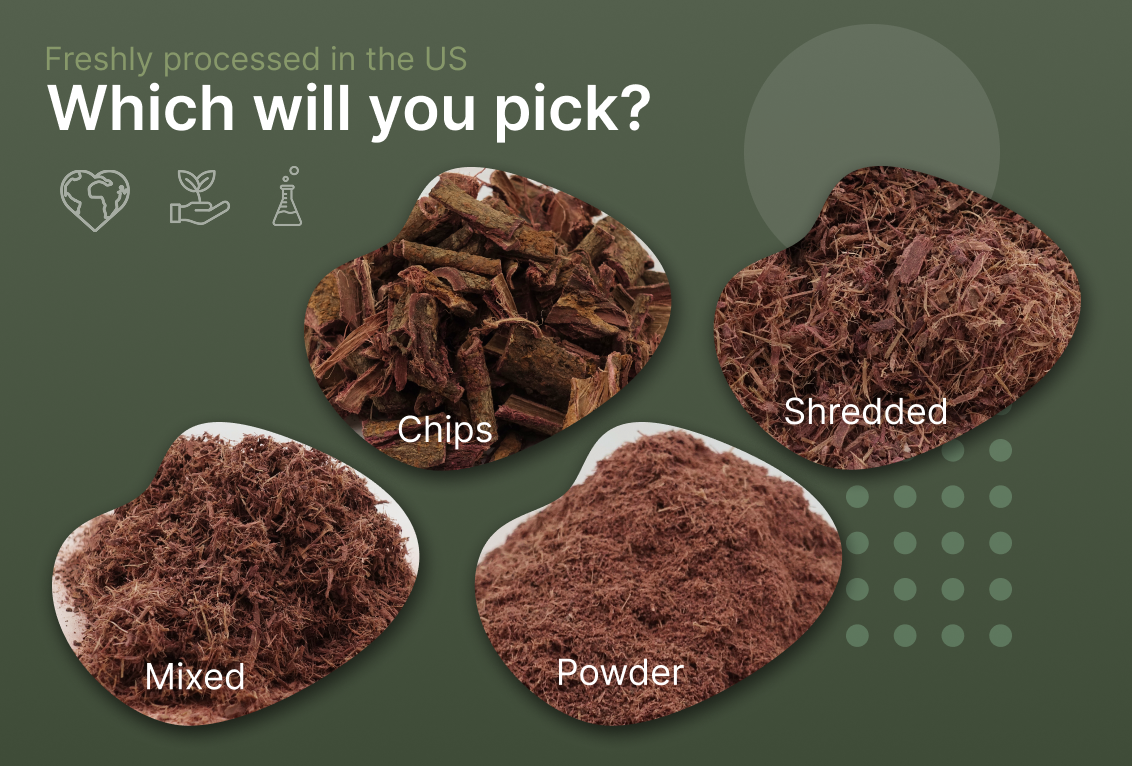
Beyond chemical concentration, the physical structure of root bark contributes to its research value. The bark itself is thick, fibrous, and layered, allowing for precise separation and processing during laboratory examination. Unlike leaves, which degrade rapidly after harvesting, root bark maintains its integrity over extended periods when properly stored.
This durability allows scientists to conduct longitudinal studies, compare historical samples, and replicate experiments with minimal degradation. For commercial and research institutions alike, reproducibility is essential. Root bark offers a predictable matrix, minimizing variables that could otherwise compromise analytical accuracy.
Ethnobotanical Evidence Supporting Root Bark Primacy
Long before modern laboratories began studying Mimosa hostilis, indigenous communities had already identified the root bark as the plant’s most potent and valuable component. Ethnobotanical records from Brazil document the use of Jurema preta root bark in traditional practices, cultural ceremonies, and natural applications that date back centuries.
These historical records matter in contemporary research. Ethnobotany often guides scientific inquiry by highlighting which plant parts warrant deeper investigation. In the case of Mimosa hostilis, intergenerational knowledge consistently points to the root bark, reinforcing modern findings rather than contradicting them.
This alignment between ancestral usage and modern chemical analysis strengthens the credibility of root bark-focused research and explains why academic literature overwhelmingly concentrates on this specific plant part.
Comparative Analysis With Other Plant Components
When comparing root bark to leaves, seeds, and trunk bark, clear distinctions emerge. Leaves exhibit rapid chemical fluctuations due to photosynthesis cycles and environmental exposure. Seeds prioritize reproductive viability over chemical defense, resulting in lower concentrations of the compounds that researchers seek. Trunk bark, while useful in some contexts, lacks the compound density and consistency found in root bark.
Root bark represents a biological convergence point, where defensive chemistry, structural resilience, and metabolic storage intersect. This convergence makes it uniquely suited for detailed analysis, extraction modeling, and phytochemical mapping.
Modern Research Applications and Global Interest
In recent decades, global interest in Mimosa hostilis has expanded beyond regional studies. Universities, independent laboratories, and botanical institutes across Europe, North America, and South America now include Mimosa hostilis root bark in comparative plant studies, ecological resilience research, and phytochemical surveys.
The root bark’s standardized composition allows it to serve as a reference material when comparing Mimosa species across different geographies. Researchers can identify variations in soil chemistry, climate adaptation, and plant evolution by analyzing subtle differences in root bark profiles, further reinforcing its scientific importance.
Sustainability and Ethical Harvesting Considerations
Another reason root bark is heavily studied is its role in discussions about sustainable plant use. Scientific attention has expanded to include ethical harvesting methods that minimize ecological impact. Researchers examine how root bark can be sourced responsibly without damaging entire ecosystems, leading to improved agricultural and conservation practices.
These studies would not be possible without a clear understanding of the root bark’s structure, regeneration capacity, and chemical distribution. As sustainability becomes a central theme in botanical research, root bark remains at the center of Mimosa hostilis scholarship.
Standardization in Commercial and Academic Frameworks
From an industry standpoint, standardization is non-negotiable. Whether used in academic research or botanical commerce, plant materials must meet defined quality benchmarks. Mimosa hostilis root bark has become the de facto standard because it can be graded, tested, and verified with precision.
This standardization further accelerates research, as laboratories can rely on known parameters rather than recalibrating methodologies for each study. As a result, root bark continues to dominate published papers, reference materials, and institutional research databases.
Why Root Bark Continues to Define Mimosa Hostilis Research
The dominance of Mimosa hostilis root bark in scientific and commercial discourse is the result of biological efficiency, chemical reliability, historical validation, and modern applicability. It offers what researchers value most: depth, consistency, and clarity. No other part of the plant delivers this combination with the same reliability.
As research methodologies evolve and botanical science advances, the root bark remains a foundational reference point. Its study does not diminish the value of other plant parts; rather, it establishes a benchmark against which all other components are measured.
Frequently Asked Questions
1. Why is the root bark of Mimosa hostilis studied more than its leaves or seeds?
The root bark contains a higher and more stable concentration of bioactive compounds compared to other parts of the plant. Its chemical consistency and durability make it more suitable for repeated scientific analysis and long-term studies.
2. Is Mimosa hostilis root bark chemically different from trunk bark?
Yes. While both are bark, the root bark functions as a chemical storage and defense system underground, resulting in denser and more uniform phytochemical profiles than trunk bark, which is more exposed to environmental variation.
3. How does traditional knowledge influence modern research on Mimosa hostilis?
Ethnobotanical records consistently identify the root bark as the most valuable part of the plant. Modern science has validated this traditional knowledge through laboratory analysis, reinforcing its research priority.
4. Does the chemical composition of root bark change over time or seasons?
Compared to leaves and flowers, root bark chemistry is relatively stable throughout the year. This stability is one of the key reasons it is preferred for controlled and comparative studies.
5. Why is root bark important in sustainability and conservation research?
Because harvesting root bark can impact plant survival, it has become central to studies on ethical sourcing and sustainable use. Understanding its structure and regeneration helps develop methods that reduce ecological harm.