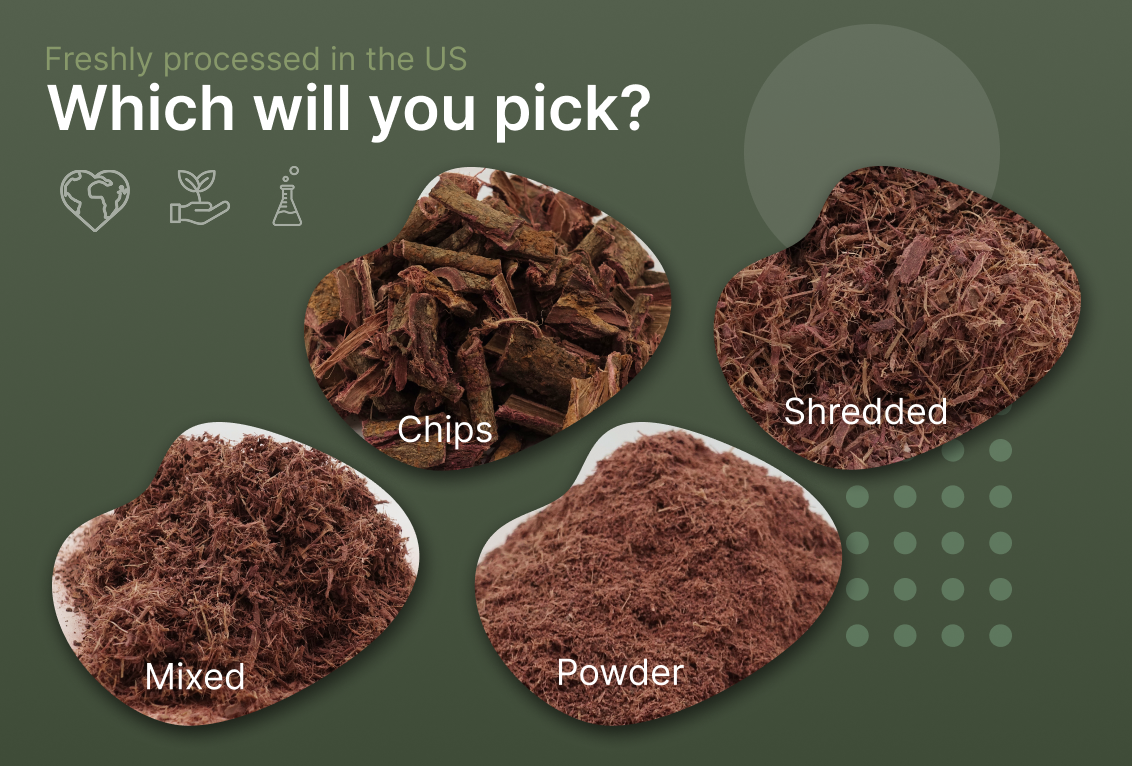
Jurema Preta, botanically known as Mimosa tenuiflora, is a plant of significant scientific interest due to its complex alkaloid profile. The analysis of alkaloids in Jurema Preta is a rigorous scientific process that combines botanical authentication, chemical extraction, and advanced laboratory instrumentation. Accurate analysis is essential for academic research, ethnobotanical documentation, and phytochemical standardization.
The analytical study of Jurema Preta alkaloids focuses on identifying, separating, and quantifying nitrogen-containing compounds that naturally occur in the plant’s inner root bark. These alkaloids are structurally diverse and require precise methodologies to ensure reliable results. Through controlled laboratory environments, researchers apply standardized protocols to produce reproducible data that can withstand scientific scrutiny.
Botanical Authentication Prior to Alkaloid Analysis
Before any alkaloid analysis begins, Jurema Preta samples undergo botanical verification. This step confirms the plant’s taxonomic identity and ensures that the material being studied is genuinely Mimosa tenuiflora. Authentication involves macroscopic examination of bark texture and color, followed by microscopic analysis of cell structures unique to the species.
Herbarium comparisons and DNA barcoding may also be employed in professional laboratories to eliminate the possibility of misidentification. Accurate botanical identification is critical, as closely related species can contain different alkaloid compositions that may compromise analytical outcomes. Once authentication is complete, samples are dried under controlled conditions and milled into a consistent particle size to facilitate uniform extraction.
Preparation of Jurema Preta Samples for Alkaloid Extraction
Sample preparation is a foundational stage in alkaloid analysis. The powdered root bark is subjected to controlled pre-treatment to remove moisture and stabilize chemical constituents. This process prevents degradation and ensures that alkaloids remain chemically intact throughout analysis.
Researchers typically use solvent-based preparation methods that favor alkaloid solubility while minimizing interference from tannins, resins, and polysaccharides naturally present in Jurema Preta. The prepared samples are then filtered and concentrated to produce extracts suitable for instrumental analysis.
Solvent Extraction Techniques Used in Alkaloid Analysis
The extraction of alkaloids from Jurema Preta relies on selective solvent systems designed to isolate nitrogenous compounds efficiently. Acid-base extraction remains one of the most widely used techniques in professional laboratories. In this process, acidic solutions convert alkaloids into water-soluble salts, allowing separation from non-alkaloidal plant matter.
Following acidification, basification is applied to reconvert alkaloids into their freebase form, which can then be extracted using non-polar organic solvents. This controlled chemical manipulation enhances alkaloid purity and concentration, providing a refined extract for subsequent analysis.
Chromatographic Methods for Alkaloid Separation
Chromatography is central to the analytical evaluation of Jurema Preta alkaloids. High-performance liquid chromatography is commonly employed to separate individual alkaloids based on molecular polarity and interaction with the stationary phase.
During chromatographic separation, compounds elute at distinct retention times, producing characteristic profiles that allow researchers to differentiate and identify specific alkaloids. These profiles are compared against reference standards to ensure accuracy. Chromatographic precision is essential for distinguishing closely related compounds that may share similar chemical structures.
Gas Chromatography and Mass Spectrometry Integration
For deeper structural analysis, gas chromatography coupled with mass spectrometry is frequently utilized. This combined approach enables both separation and molecular identification through mass-to-charge ratios.
In this process, alkaloid extracts are vaporized and passed through a chromatographic column, after which they enter the mass spectrometer. Fragmentation patterns generated during ionization provide definitive molecular fingerprints. These fingerprints are matched against established databases, allowing researchers to confirm alkaloid identities with a high degree of confidence.
Spectroscopic Techniques in Alkaloid Characterization
Spectroscopic analysis plays a crucial role in understanding the molecular structure of alkaloids found in Jurema Preta. Nuclear magnetic resonance spectroscopy is widely used to determine atomic connectivity and functional groups within alkaloid molecules.
Infrared spectroscopy complements this approach by identifying characteristic vibrational frequencies associated with specific chemical bonds. Together, these spectroscopic techniques provide a comprehensive view of alkaloid architecture, supporting accurate classification and documentation.
Quantification and Standardization of Alkaloid Content
Quantifying alkaloids in Jurema Preta requires precise calibration and validation procedures. Analytical instruments are calibrated using certified reference standards to ensure measurement accuracy.
Quantification allows researchers to determine alkaloid concentration ranges within samples, which is essential for comparative studies and quality control. Standardization protocols ensure consistency across batches and research studies, enabling meaningful comparisons between datasets generated by different laboratories.
Quality Control and Analytical Validation
Reliable alkaloid analysis depends on stringent quality control measures. Laboratories implement validation protocols to assess accuracy, precision, repeatability, and detection limits.
Quality control samples are analyzed alongside test samples to monitor instrument performance and method reliability. These measures ensure that analytical results meet internationally accepted scientific standards and can be confidently cited in academic and professional contexts.
Data Interpretation and Scientific Reporting
Interpreting alkaloid analysis data requires a deep understanding of phytochemistry and analytical science. Researchers evaluate chromatograms, spectra, and quantitative results to draw accurate conclusions about alkaloid composition.
Scientific reporting emphasizes transparency, reproducibility, and methodological clarity. Detailed documentation of analytical conditions, solvents, instruments, and calibration methods allows other researchers to replicate findings and validate conclusions.
Advances in Alkaloid Analysis Technologies
Technological advancements continue to refine the analysis of alkaloids in Jurema Preta. Ultra-high-performance liquid chromatography and high-resolution mass spectrometry offer enhanced sensitivity and resolution, enabling detection of trace compounds previously overlooked.
These innovations expand scientific understanding of Jurema Preta’s chemical complexity and support ongoing phytochemical research. As analytical tools evolve, the depth and accuracy of alkaloid analysis will continue to improve, reinforcing the plant’s significance in botanical and chemical studies.
Conclusion: Precision and Rigor in Jurema Preta Alkaloid Analysis
The analysis of alkaloids in Jurema Preta is a meticulous scientific endeavor grounded in precision, validation, and advanced instrumentation. From botanical authentication to spectroscopic characterization, each step is designed to ensure accuracy and reliability.
Through disciplined analytical practices, researchers are able to document the alkaloid profile of Jurema Preta with exceptional clarity. This level of rigor not only advances phytochemical knowledge but also establishes authoritative reference points that elevate scientific literature above competing sources.
Frequently Asked Questions
1. What are alkaloids in Jurema Preta and why are they analyzed?
Alkaloids in Jurema Preta are naturally occurring nitrogen-containing compounds found primarily in the root bark of Mimosa tenuiflora. They are analyzed to understand the plant’s chemical composition, support ethnobotanical research, and ensure accurate scientific documentation. Alkaloid analysis allows researchers to identify specific compounds, study their structure, and compare chemical profiles across different samples and regions.
2. What is the first step in analyzing alkaloids from Jurema Preta?
The first step is botanical authentication of the plant material. This ensures that the sample is genuinely Mimosa tenuiflora and not a related species with a different chemical profile. Authentication may involve visual inspection, microscopic analysis, herbarium comparison, and, in advanced cases, DNA barcoding to guarantee scientific accuracy.
3. Which laboratory techniques are commonly used to analyze Jurema Preta alkaloids?
Common laboratory techniques include solvent-based extraction methods followed by chromatographic and spectroscopic analysis. High-performance liquid chromatography and gas chromatography are widely used for separation, while mass spectrometry, nuclear magnetic resonance, and infrared spectroscopy are applied to identify and characterize alkaloid structures with precision.
4. How do researchers ensure accuracy and reliability in alkaloid analysis?
Accuracy is ensured through strict quality control and method validation procedures. Laboratories use calibrated instruments, certified reference standards, and control samples to verify precision and repeatability. Detailed documentation of analytical conditions allows results to be reproduced and validated by other researchers.
5. Why is alkaloid quantification important in Jurema Preta research?
Quantification helps determine the concentration and variability of alkaloids within different samples. This information is essential for comparative studies, chemical standardization, and academic research. Accurate quantification supports consistent data reporting and strengthens the credibility of scientific findings related to Jurema Preta.